
Wash test number fourteen
Thirteen attempts to make a game look like watercolour, and the fourteenth, which we kept. On paper grain, colour that bleeds in the rain and why a crash should leave a stain.
Watercolour is a terrible medium for a car combat game, which is precisely why we wanted it.
Paint on wet paper does not stay where you put it. It runs, pools and dries with a hard edge you did not ask for. A car game wants the opposite: crisp silhouettes, readable roads, a clear idea of where the other car is so that you can hit it. For the last nine days we have been trying to have both.
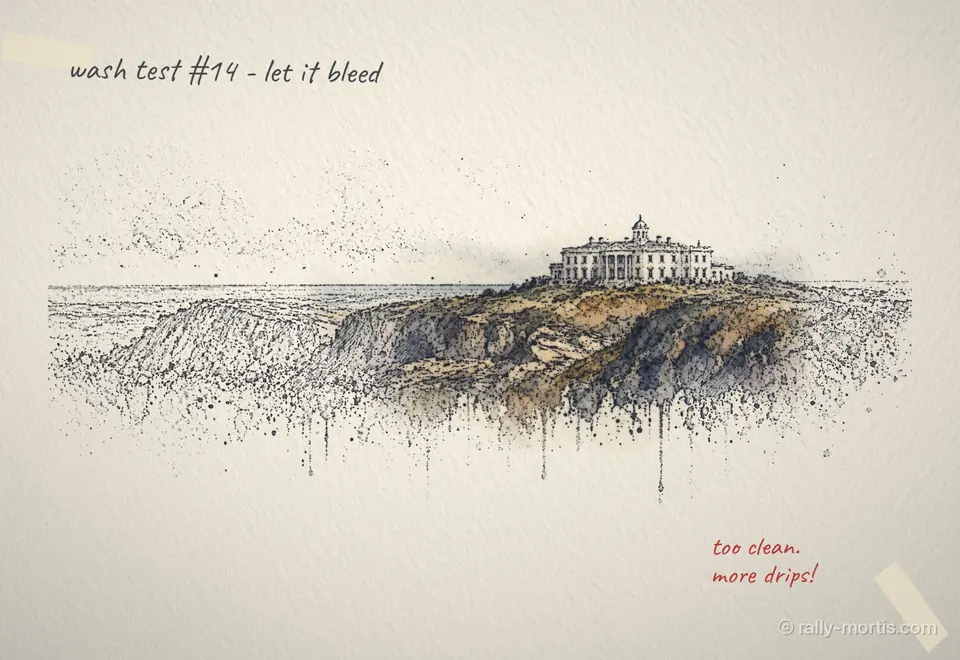
What went wrong, thirteen times
The first tests looked like a game with a paper filter on top, which is what they were. The paper sat over the picture like a sheet of tracing paper, the colour underneath stayed perfectly flat and the result felt cheap. Tests four to nine went too far the other way: so much bleeding and blotting that you could not tell the road from the verge, which in a racing game is a serious complaint.
Tests ten to thirteen were the arguments about where the paint goes. Does the sky get a wash? Do shadows? Does a car?
What fourteen does
- The paper is in every frame. Its grain sits inside the colour, not on top of it, so dark areas look as if the pigment has settled into the dips.
- Ink holds the shapes. Roads, kerbs and cars keep an ink line, so you can always read where you are going. The colour is allowed to wander; the ink is not.
- Rain makes it run. In wet weather the washes bleed further and the sky drips. Lowmarsh, which is mostly water, is going to look extraordinary or illegible. We will find out which.
- Crashes leave a stain. Damage does not vanish when the camera moves on. A wreck leaves a mark on the road for the rest of the race, so a lap round the promenade becomes a record of everything you did on the previous one.
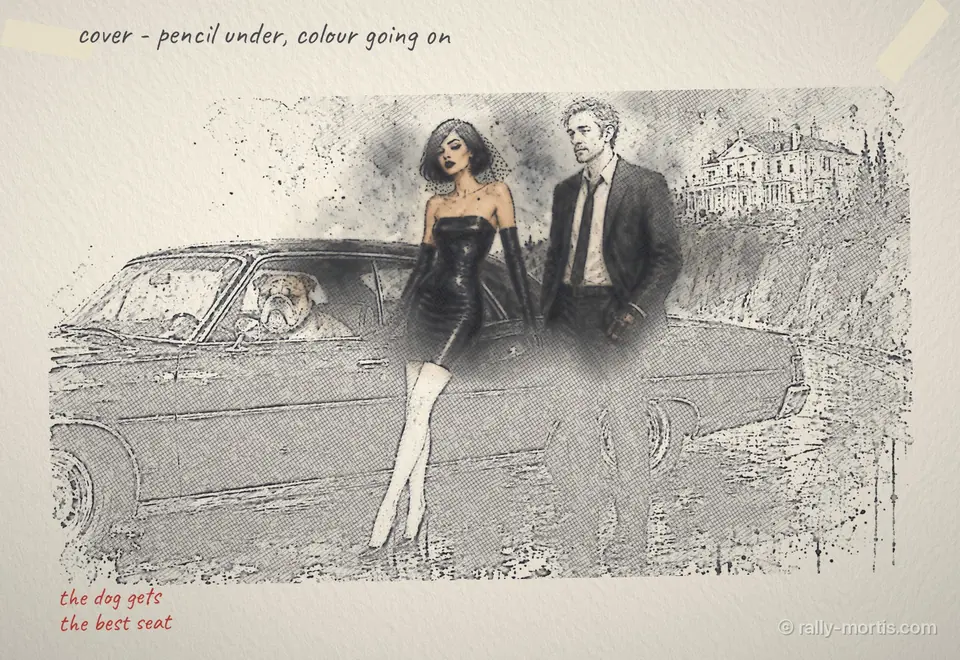
The target
Below is where we want the game to end up: the key art for the project, finished this week. Wade and Vee on the cliff road, the house behind them, the dog in the back seat with an opinion. The engine is nowhere near this yet. But it is now pointing at it, which is the important part.
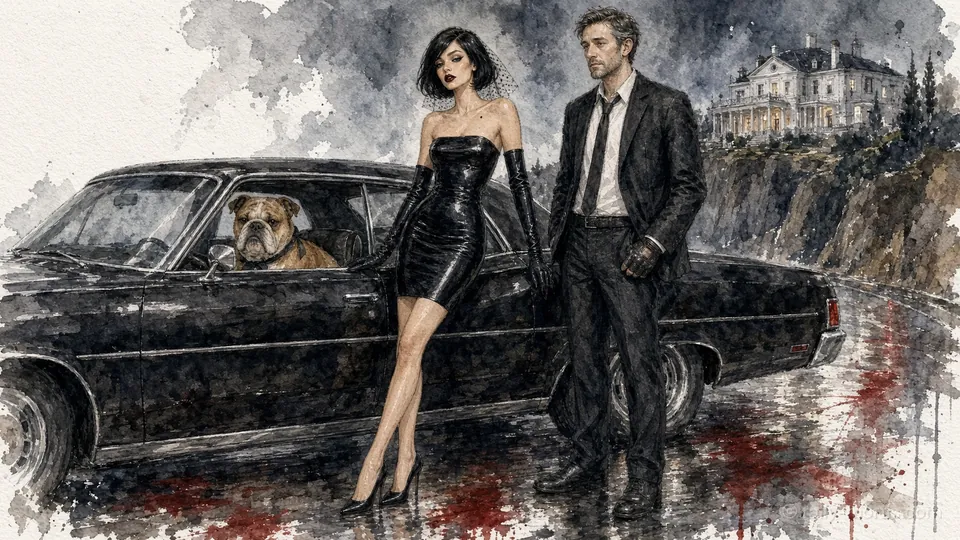
Next: the man at the wheel. Wade Kessler, who has been driving for other people for twelve years and has never once, according to his late employer, said anything interesting.