
The right to try
Designing Wade Kessler, a driver who says very little, wears his gloves at all times and was left, in a will worth four billion, the right to try.
The will has a line for Wade. It is the shortest line in it.
To my driver, Wade, who never once said anything interesting: the right to try.
That line did more character design than a month of meetings. Wade is the man who sat in the front for twelve years while the richest family in Valmora argued in the back. He knows every road in the country. He knows which relative tips and which one counts the change. He has never, in all that time, been asked what he thinks, and he has stopped volunteering.
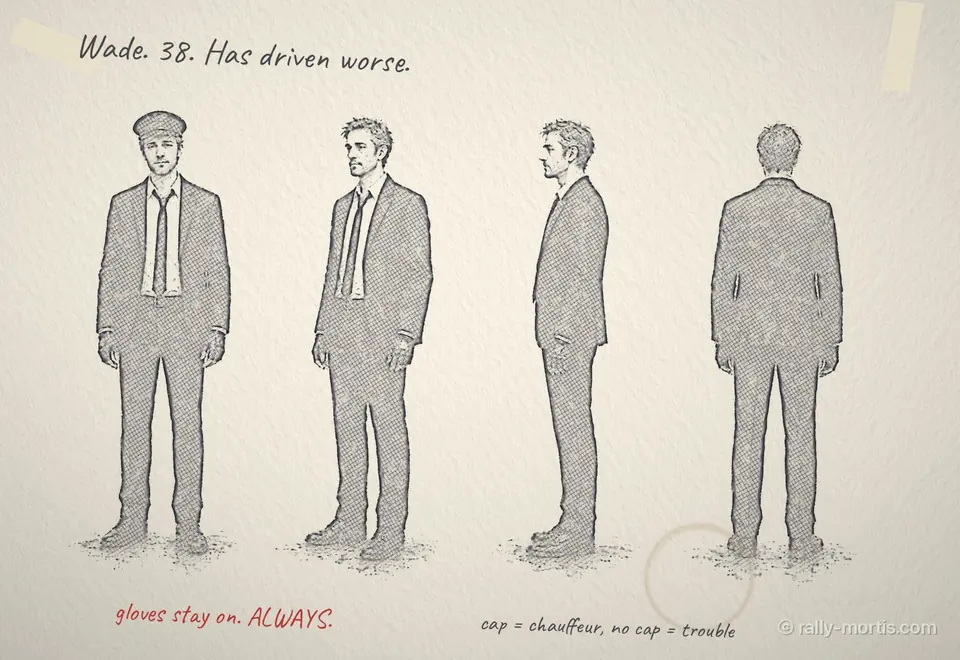
Quiet, not blank
The danger with a taciturn hero is that he turns into a hat with a steering wheel. We wanted Wade’s silence to read as a choice. So:
- He answers questions with fewer words than were in the question. The script has a rule: if Vee asks him something in nine words, he gets five.
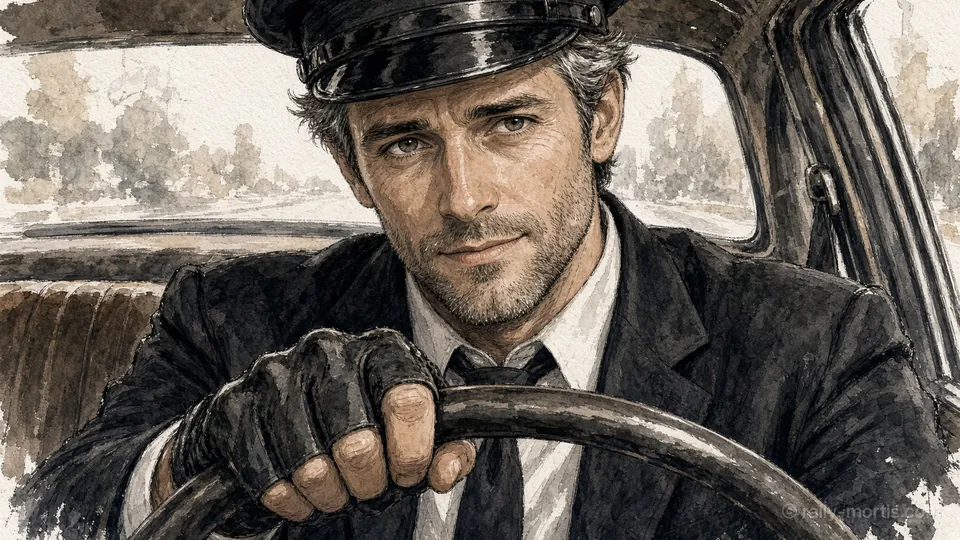
- His hands do the talking. In the story panels his gloves are always doing something: tightening on the wheel, adjusting the mirror, resting on the roof of the car while a relative is being unpleasant.
- He is very, very good at his job. Wade’s competence is the joke and the point. When he finally drives as he has always wanted to, it should feel like a quiet man clearing his throat.
The suit
He wears a black chauffeur’s suit, because it is the only suit he owns, and he will be wearing it in a salt desert, a flooded canal town and on a frozen lake. We have accepted that this is unreasonable. So has he.
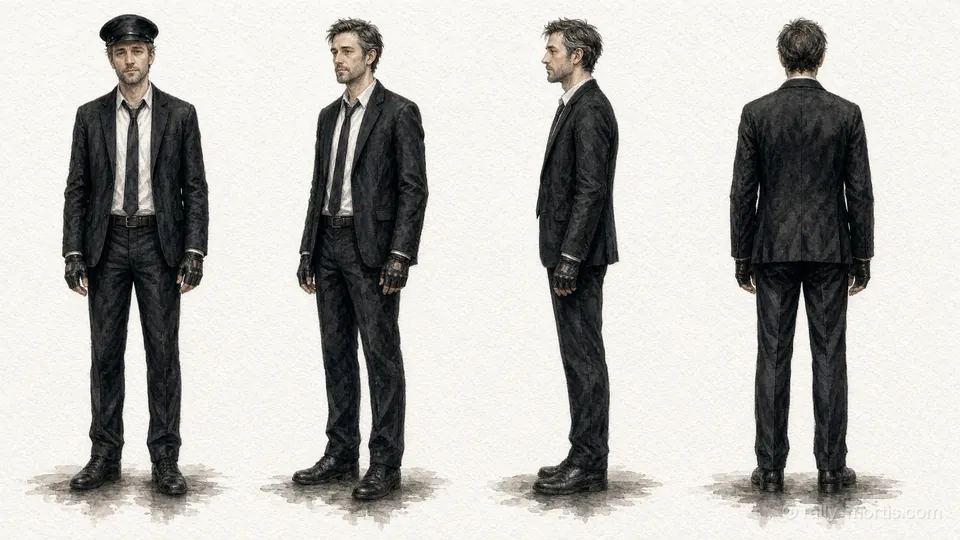
Wade is 38. He has driven worse roads than the Long Spine, and he will again. Next time: the person in the passenger seat, who has read every clause of the will, out loud, at speed, and would like you to know she was not consulted on the dog.